4D tracking
Flagellar kinematics
Description
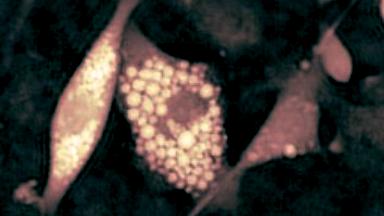
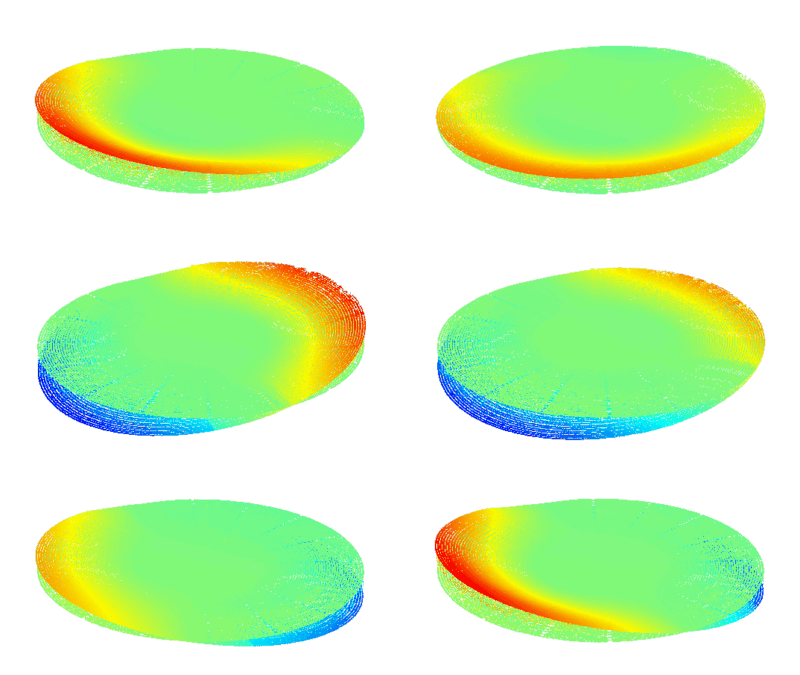
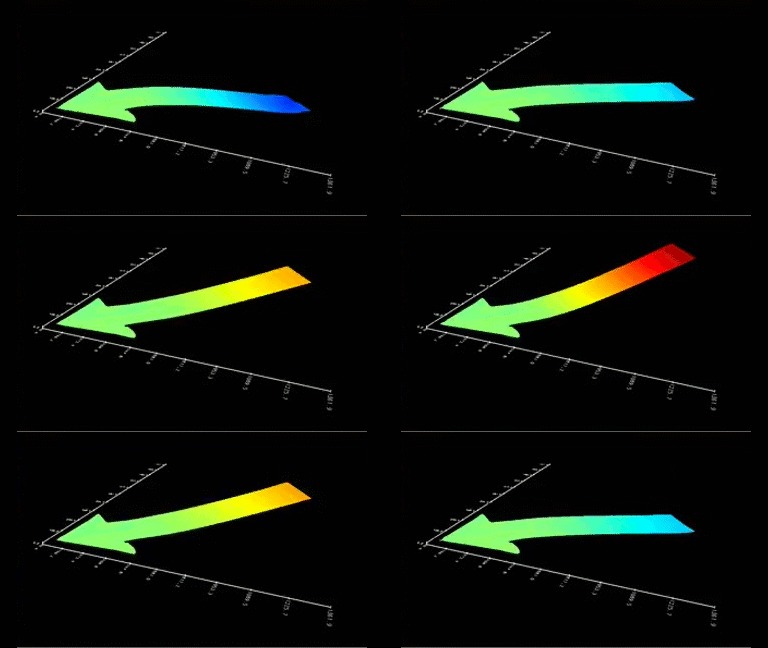
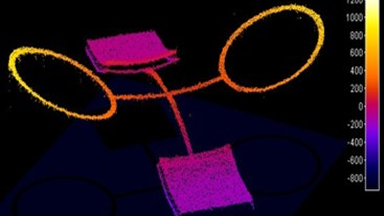
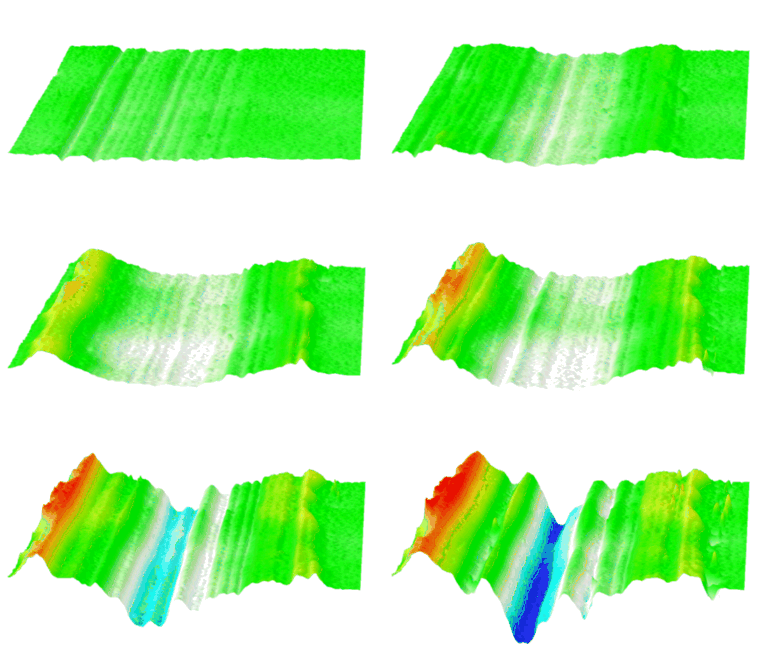
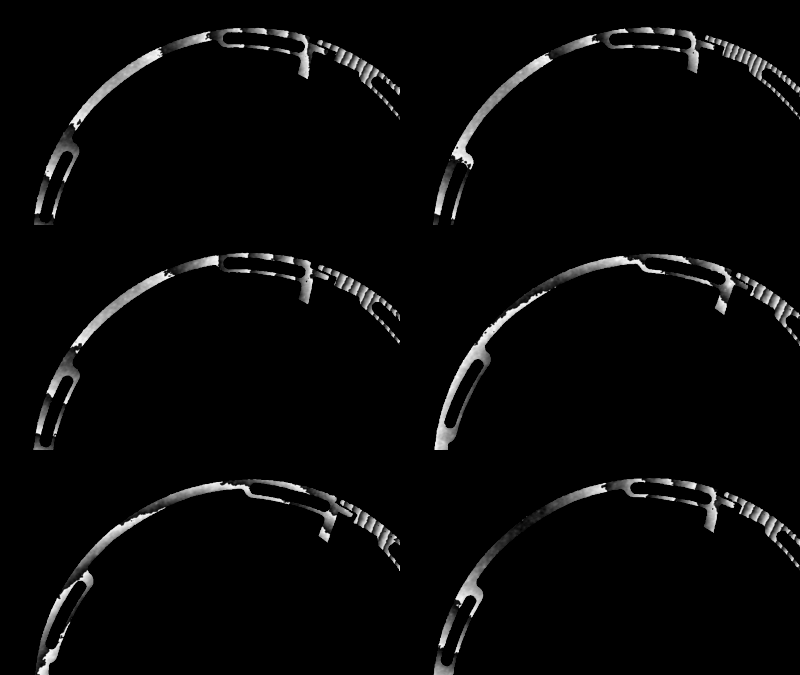
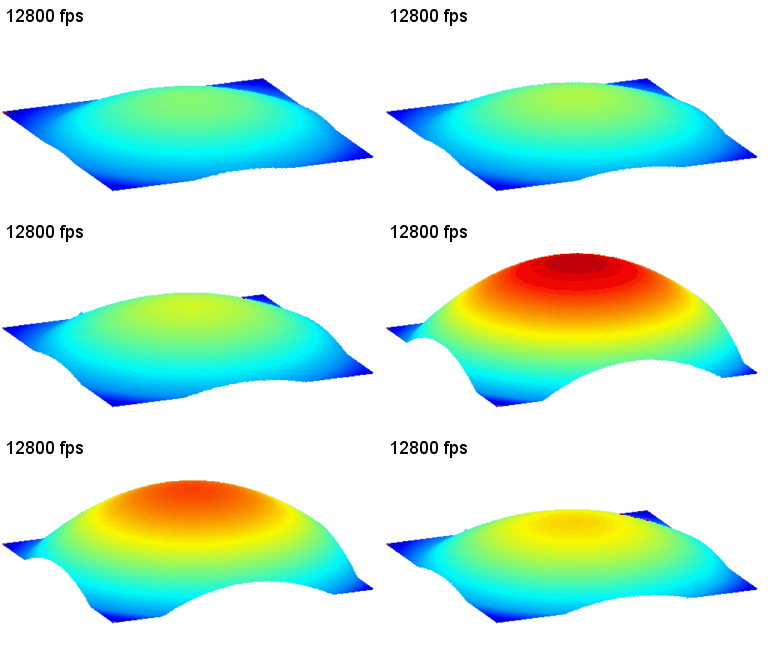
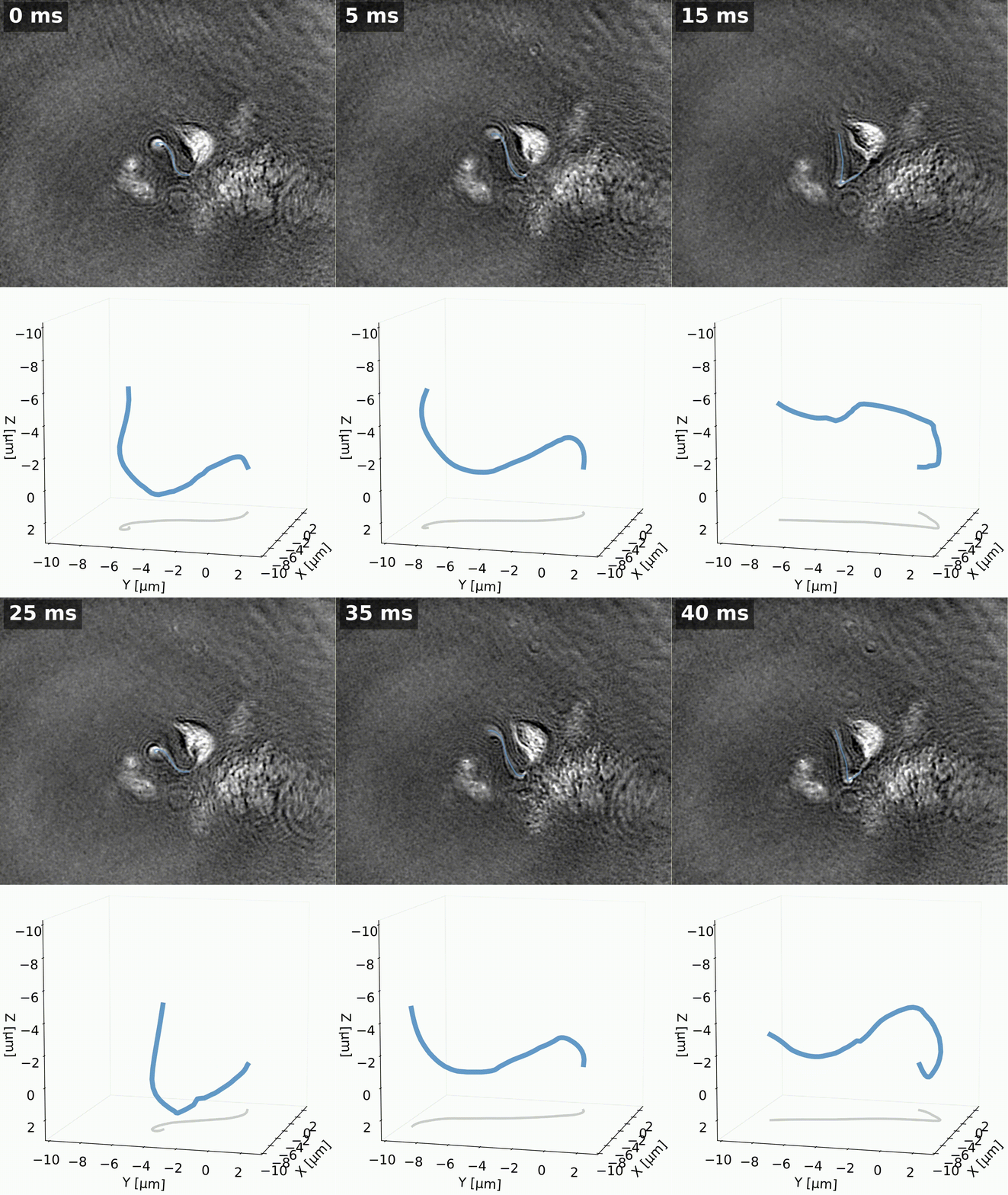
Eukaryotic flagella drive propulsion, steering, and feeding flows across diverse systems, linking molecular regulation to cell-level behavior. Quantifying this link is a 4D measurement problem because the biologically relevant signal is the full 3D waveform evolving in time, often at beat frequencies that can approach ~100 Hz. Capturing these dynamics requires an unusual combination of high spatiotemporal resolution, large sampling volume, and computational efficiency. DHM® meets these constraints by recording the optical wavefront in a single hologram and enabling numerical refocusing and volumetric reconstruction without mechanical z-scanning, providing a scalable foundation for 4D flagellum tracking.
Unique advantages of Lyncée Tec DHM®
- High temporal resolution: 194 volumes/s (standard DHM® camera), and up to 100,000 fps in high-speed DHM® configuration
- Single-shot volumetric information: 3D volume encoded in one hologram, recovered by numerical refocusing (no mechanical z-scanning)
- High precision: sub-micron 3D localization with ~50 nm axial precision.
- Label-free: quantitative phase imaging enables measurements without dyes, closer to natural conditions for motility studies
Material and methods
- Biological Model: Reclinomonas americana
- DHM® T1000 with 4D-tracking software module
Results
DHM® has enabled the first direct quantification of the 3D motion of the flagellum of a phagotrophic flagellate, capturing highly non-planar waveforms in a label-free workflow. Characterizing the diversity of flagellar wave patterns provides the quantitative basis for a mechanistic understanding of how flagellates shape pelagic food webs, where locomotion and feeding currents drive trade-offs among prey encounter, nutrient uptake, energetic cost, and predation risk.
Publications
Reproductive Biology
Description
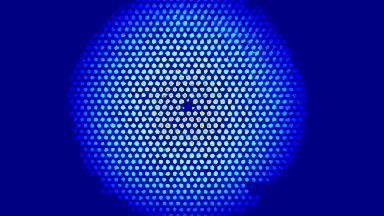
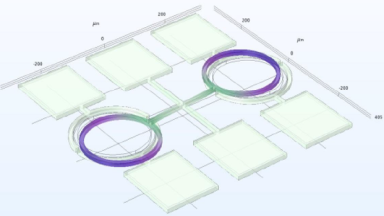
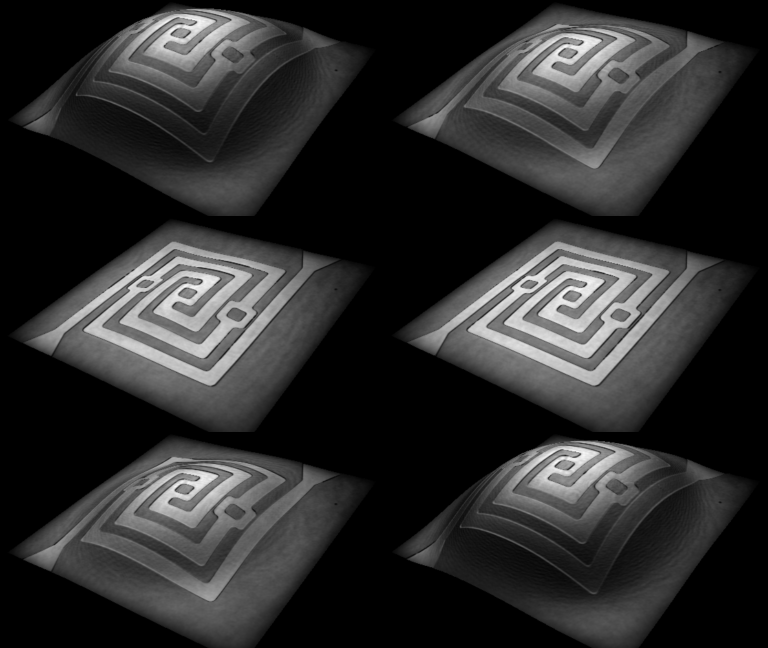
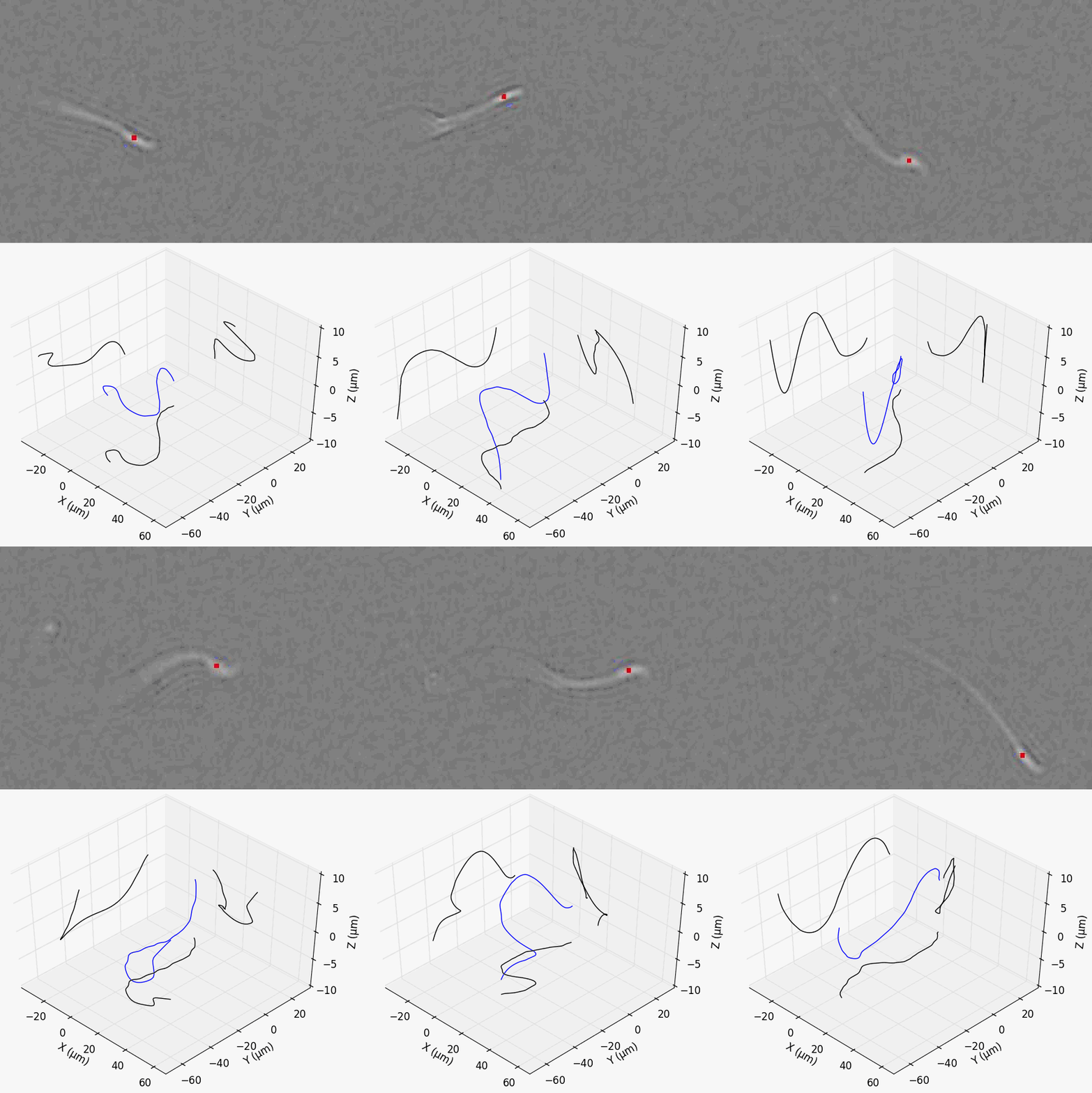
Sperm motility is a critical biomarker in reproductive biology and fertility research. Accurate analysis requires resolving rapid 3D flagellar beating together with complex swimming trajectories in confined environments, a challenge that conventional 2D microscopy cannot fully capture. DHM® enables label-free 4D sperm tracking through single-shot volumetric imaging, eliminating mechanical z-scanning while providing high spatiotemporal resolution across extended depths. The approach supports quantitative analysis of 3D flagellar waveforms, z-motion, and trajectory chirality in a unified workflow.
Unique advantages of Lyncée Tec DHM®
- High temporal resolution: 194 volumes/s (standard DHM® camera), and up to 100,000 fps in high-speed DHM® configuration
- Single-shot volumetric information: 3D volume encoded in one hologram, recovered by numerical refocusing (no mechanical z-scanning)
- High precision: sub-micron lateral resolution and nanometer-range axial (z) resolution.
- Label-free: quantitative phase imaging enables measurements without dyes, closer to natural conditions for motility studies
- Comprehensive 4D motility analysis: links the 3D beat pattern to the resulting 3D swimming path, beyond 2D projections.
- Large sampling depth for higher throughput: holographic reconstruction supports larger observation volumes
Material and methods
- Biological Model: mice, bovine, and human sperms
- DHM® T1000 with 4D-tracking software module
Results
DHM® enables quantitative 4D sperm motility analysis by capturing fast 3D flagellar beating together with complex swimming trajectories over time. High-speed holographic imaging reveals highly non-planar waveforms, traveling z-plane excursions, and coordinated rolling dynamics linked to trajectory chirality, uncovering biomechanical features inaccessible to conventional microscopy. The approach provides new insight into how sperm generate propulsion, regulate torsional forces, and maintain chiral memory during swimming.
Publications
Michael Muschol, Caroline Wenders and Gunther Wennemuth
Lyncée Tec team provided us with a full system consisting of a DHM, incubation chamber and fluorescence module to easily acquire images of sperm cells without perturbing them. The 4D tracking capability of the Lyncée Tec microscope allows us to study the 3D trajectories in time of sperm cells at an unprecedented speed of 194 images per second without scanning. In combination with other software tools we were able to use Lyncée Tec tracking software to extract the full 4D trajectories of the sperm cells in the field of view. This novel feature helps us observe the sperm cells specific behavior and correlate it with clinical conditions.
This unique system allowed us to enter a completely novel field of research in male reproduction.
Microbial Motility
Description
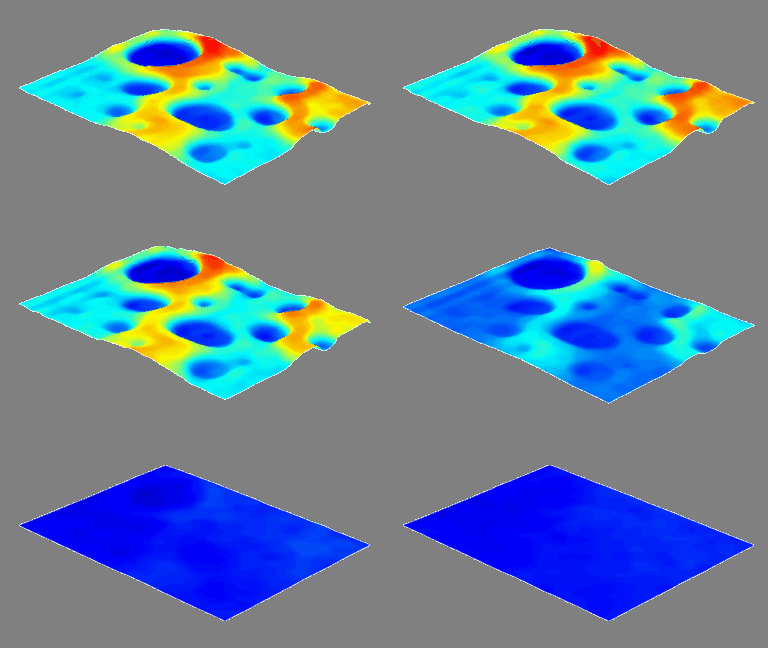
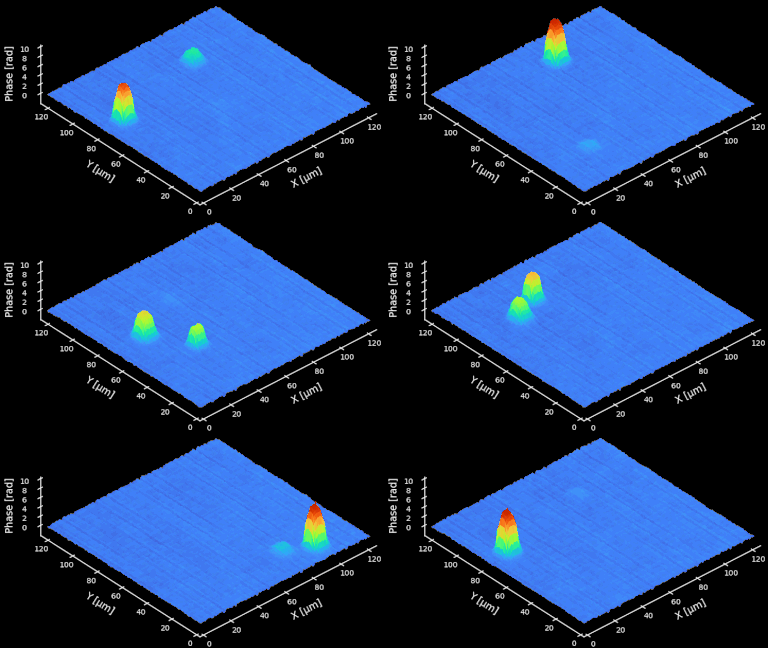
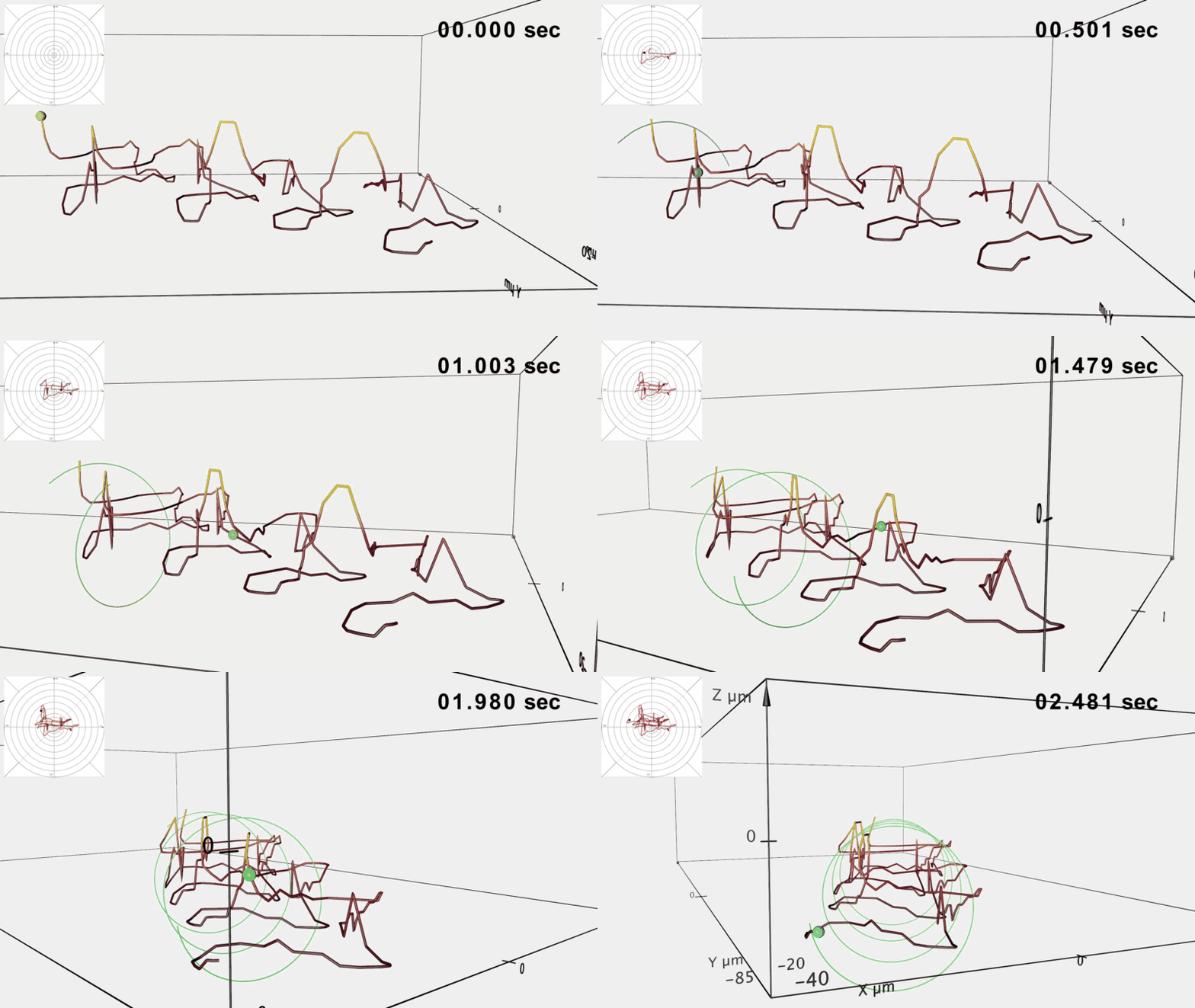
Microbial motility drives processes ranging from grazing and chemotaxis to parasitic infection and environmental transport. Accurate characterization requires tracking microorganisms in fully three-dimensional environments, where conventional 2D microscopy often captures only projected trajectories or cells confined to the focal plane. DHM® enables label-free 4D microbial tracking through single-shot volumetric imaging, eliminating mechanical z-scanning while supporting scalable analysis across extended depths. The approach enables quantitative characterization of complex swimming behaviors, 3D trajectories, and population-scale motility dynamics with high spatiotemporal resolution.
Unique advantages of Lyncée Tec DHM®
- High temporal resolution: 194 volumes/s (standard DHM® camera), and up to 100,000 fps in high-speed DHM® configuration
- Single-shot volumetric information: 3D volume encoded in one hologram, recovered by numerical refocusing (no mechanical z-scanning)
- High precision: sub-micron lateral resolution and nanometer-range axial (z) resolution.
- Label-free: quantitative phase imaging enables measurements without dyes, closer to natural conditions for motility studies
- Large sampling volume for higher throughput: 5 mm × 5 mm × 0.2 mm (L×W×H), with the axial range readily extended numerically via refocusing.
Material and methods
- Biological Model: Vibrio coralliilyticus
- DHM® T1000 with 4D-tracking software module
Results
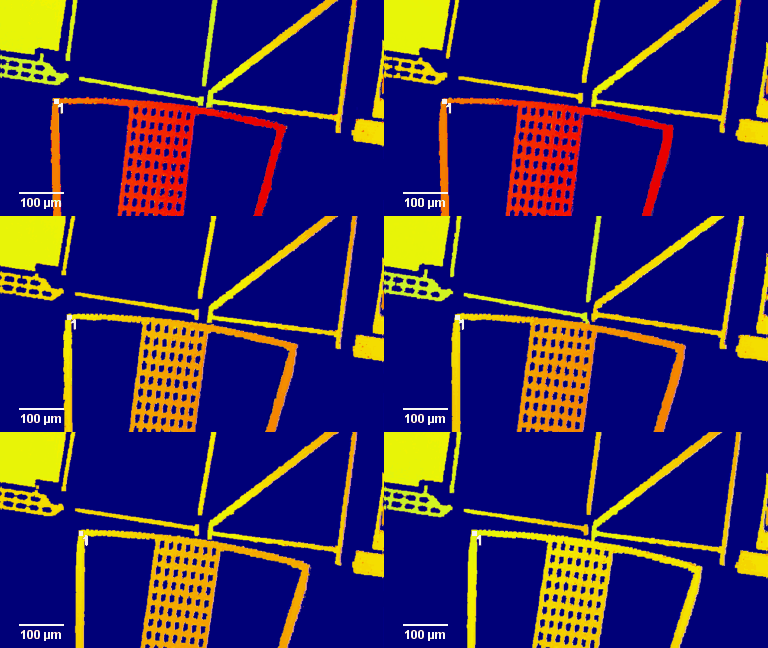
DHM® enables quantitative 4D microbial tracking by resolving complex swimming behaviors and rapid reorientation events in fully three-dimensional environments. High-speed holographic imaging supports robust tracking through sharp turns and fast directional changes while simultaneously providing label-free quantitative phase measurements of cell size and morphology. Reconstruction of the full 3D volume preserves the spatial context of motion, revealing nearby obstacles, non-motile cells, and confinement features alongside microbial trajectories. This enables direct investigation of how local microenvironments shape swimming behavior and motility dynamics.

“We have tried multiple other systems to track bacteria, and were very positively surprised by the ease of use and the near-immediate results we could obtain with the Lyncée solution”